As I mentioned in the introduction, I am not perfect. There are times where I will publish a ranking and then, upon reflection, realize I either missed something totally or, at least, got something slightly wrong. I won't go back and edit the original posts, but I think it's only fair to the readers that I provide updates at the bottom of each entry. For example, in the Tropicana Field article, I realized I forgot about a pretty cool mural and that I was wrong about my guesses concerning the ground rules and those awful catwalks. You can read all about that in that post.
Two more things. People have asked me about "food" and "bars" and other such things at they relate to the Trop. A good rule of thumb is, if it's not mentioned in the piece, it's probably not worth writing home about. In most cases, every stadium has generic, run of the mill ballpark fare. If a food item was particularly great or awful I will be sure to mention it.
Finally, you can expect a new entry every week or so.
Thanks!
Friday, February 6, 2015

Thursday, February 5, 2015
#30: Tropicana Field

Tropicana Field
One Tropicana Drive
St. Petersburg, Florida 33705
Capacity: 31,042
Indoors/outdoors:
Non-retractable roof
Notable Game Attended:
Orioles v. Rays; October 2, 2012
If you’ve ever been to the greater Tampa Bay area, there are
probably a few things you notice right away.
The first is, no matter the time of year, it’s very hot and very humid. The second is the magnificent
bridges that span both Old Tampa Bay and new Tampa Bay (simply called “Tampa
Bay”). While these bridges are certainly
nice to look at and form quite the picturesque sight line, they also are
symbolic of one of the biggest problems that the area’s major league ballclub experiences
on a nightly basis. In short, the
stadium, located in St. Petersburg, is not the most accessible place on
Earth. Nor is it located in a
particularly bustling area. Nor is it
particularly nice to look at both inside and out. Combine all those things, throw in the fact
that the most successful team in baseball history has already laid claim to much of the area, and you have a recipe for disaster. The result of that recipe? The #30 ranked stadium on the list, Tropicana
Field, home of the Tampa Bay Rays.

A bit of background. Tropicana
Field (formerly called the “Florida Suncoast Dome”) was built with the sole
purpose of bringing a baseball team to Western Florida. At the time (the late 1980s, to be exact), I’m
sure this place was seen as a practical building as domes were all the rage in
baseball from the late 60s until about the turn of the century. Most importantly, the roof would shelter fans
and players alike from the oppressive heat offered by Florida summers. The problem was, of course, that no team came. Not until 1998 when the Rays (then called
Devil Rays) and Arizona Diamondbacks both joined Major League Baseball. I’m not sure on this, but I would bet that
fans and ownership alike both grew tired of “The Trop” early on. While Arizona enjoyed a brand new park the
Rays were stuck in baseball purgatory (or hell) playing their games in what can
only be described as a Costco with AstroTurf; a dark, dreary, lifeless place
that cannot possibly stick around if the Rays hope to remain in the Tampa Bay
area.
Baseball purists will tell you that there is something very
displeasing about watching a baseball game inside, as if it’s Anti-American or
something. I happen to disagree and can
see the need for having a stadium with a roof in places like Seattle and
Florida. What the designers of the Trop
failed to keep in mind, I think, is that just because a place needs to be
indoors does not mean that it has to feel like you’re watching a baseball game
in a dungeon. The first thing you notice
when stepping inside Tropicana Field is how “dark” the place is. It’s poorly lit, the walls are gray and the
concourses are lifeless. Walking out
into the seating section offers little relief from the depressing feel of the
place. The only color afforded radiates
from a “Tropicana” ad in the outfield and the yellow foul poles. The roof looks like it was designed to be
featured in a Hollywood film about dystopian America and houses concentric catwalks that actually hang low enough that balls often hit them. This absurdity cannot be overstated. PART OF THE ROOF CAN BE HIT BY
BASEBALLS. To mitigate this “problem”
the Rays have a unique set of ground rules which, if memory serves, apply
different results depending on which catwalk is hit. I believe one of them results in an out, the
other results in a ground rule double and the final ring results in a home
run. Of course, there is no place for
something like this in a ballpark, which is another reason why The Trop is
ranked so low. All parks have their
quirks, that’s what makes them so unique, but the Trop’s quirk is by far the
toughest one to digest for baseball fans.


As previously mentioned, the location and surrounding area
are not ideal. Rays’ ownership has often
criticized the park as being located away from the heart of the Tampa Bay
region, and they are correct. The park
is in St. Petersburg which is located across from the City of Tampa and
requires traversing an almost three mile bridge across Old Tampa Bay to get
to. Once you arrive, there is not much
in the way of pre-game festivities to be found.
I believe my buddy and I found the one bar close to the park and it was
actually a chill place, owing largely to the fact that, unless there is a
playoff game going on, not a soul enters this place, adding to the
lifelessness. I know in the introduction
I said I would not hold “lack of atmosphere” against a place if the team was
bad, but the fact of the matter is, this place is deserted whether the Rays are
in first place or last, a testament to just how bad a place it is to catch a
baseball game.
Not all is lost, however.
The slanted roof is unique and looks pretty cool, I guess. And in center field there is a tank of sting
rays (stingers removed) that folks can go up and pet prior to a game. This is a unique feature that is probably
pretty necessary in what is otherwise an incredibly unremarkable place.

So yea, the worst park in the majors. Someone had to be last and Tampa, it's you. Hopefully it won’t be around much longer as
it looks like the Rays will either get their new park or try to head North of the Border, but I suppose only time will tell.
In the meantime the Trop will live on, to the chagrin of us all.
UPDATES
-A reader informed me of the actual ground rules at The Trop concerning the catwalks. Apparently, none of the rings are an automatic out, but it does provide for some high comedy. You see, defensive players often try to line up the ball when fielding a fly ball, and basic geometry and physics dictates that every hit ball will come down to Earth in some sort of beautiful parabola. The catwalks completely mess this up and thus make any "can of corn" hit at the Trop an adventure.
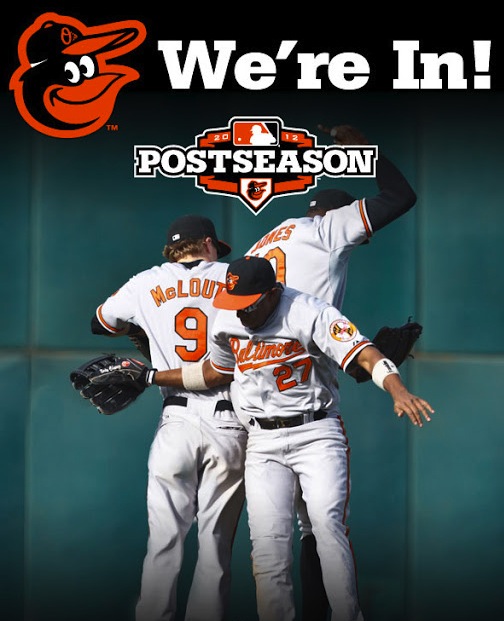
-I CANNOT BELIEVE I forgot to mention the gorgeous display at the Trop honoring the final night of the 2011 regular season. For those not familiar with the events surrounding this wonderful night (aka anyone that isn't a Rays, Red Sox or Orioles fan), the evening ended with the Red Sox blowing a historic division lead, thanks to the gutsy play of one Robert Andino. Anyway, this "mural" does a much better job at highlighting the events of that evening than I ever could, so check it out if you're ever in the stadium. For us Orioles' fans, this night was the highlight of a 13-year period of pure awfulness which was, thankfully, put to rest in 2012.


A Brief Introduction

I don’t remember my first live baseball game. I believe I was roughly three years old when
I attended a San Diego Padres game with my father and grandfather at then Jack
Murphy Stadium (now called Qualcomm – the Chargers still play there, the Padres
moved into a new stadium in 2004). My
only proof of having attended that game is captured in a picture buried
somewhere in my parents’ house and features yours truly sporting a nifty tan and gold Padres’ baseball cap (and probably a face full of cotton candy). While I’m sure I was like most young children
at a baseball game (read: ready to leave
by the 5th inning) it’s undeniable that my father and grandfather
did a wonderful job starting me early on what has, for 33 years running, been
my life’s greatest hobby (and I’m not sure if “hobby” is the right word… “obsession” perhaps?)

I love baseball. Love
it. Love everything about it. Historian Bruce Catton once wrote, “Say this
much for big league baseball — it is beyond question the greatest conversation
piece ever invented in America.” While I’m
sure this isn’t true for most people, it’s certainly true for me. I can talk about baseball with anyone,
anywhere at any time. I can watch pretty
much any baseball game that is on TV. I
know more about the sports’ history than any other subject, and it isn’t
particularly close. I love the preseason,
the regular season, the post season and the offseason. I love MLB Network and MLB Network
radio. I love the memories of playing
catch with my father. I love baseball
movies, baseball books, baseball documentaries (although I don’t like Ken Burns’
“Baseball” as much as most people do).
Yea, I have an obsession and it’s probably not healthy – but what
obsession is?
Most of all, I love attending live games. There is nothing as aesthetically pleasing as
going to a baseball game. It’s pretty
hackneyed at this point to talk about the “smell of the grass” or the “taste of
the ice cold beer” or the “sound of the bat cracking” but these clichés all
ring true to me. After all, most clichés
come about due to some sort of truth, right?
All this is to say, that it made perfect sense for me to make it a goal
in life to attend a baseball game in every current active major league baseball
stadium (and yes, this means that when the Braves’ new park opens in 2017, I
will have to schlep on down to Atlanta, go to the Coca-Cola Museum and attend a
game there).
The goal started off as a bit of a joke, an impractical
dream that made perfect sense in my head, but wasn’t grounded in a sliver of
reality. My original idea, as a
16-year-old with a fresh driver’s license was to save up enough money in one
summer to take the next summer off and drive around the country and see every
park in three months. You can probably
list 20 or so reasons why this idea never really gained steam but let’s just
say that earning $5.75 an hour as a bag boy at Safeway is not the best way to
finance a three month vacation. My next
bright idea was to write a letter to the editor of Sports Illustrated and ask
him to pay for me to drive around the country and document my trip (one of my
favorite films is “Almost Famous” and maybe you can see why). This suggestion was rejected with extreme
prejudice and I was, unfortunately, left with option three – to gradually
complete my goal over several summers, seeing a park or two (or sometimes more)
on each trip until completion.
Fortunately, I have several friends who share a similar love for the
game and finding a companion for most of the trips was not difficult.
All-in-all, the quest took the better part of two decades
but following an excursion to Seattle last July it was finally complete. Which, of course, begs the question, now what?
Originally I was going to simply rank the stadiums 1-30 and leave it at
that, but, hey, this was quite the achievement and it deserves a little more
reflection and a bit more written words for the sake of posterity. So, I am using this humble little blog to
slowly release my rankings, one at a time, with a brief write up on each. A few things to consider here:
1
There is no definite rating system like you
would see most places. Different things
matter differently at different places.
To use a category like “historical significance” and have it weighted
equally when comparing, say, Wrigley Field to Marlins Park is insulting to the
former and unfair to the latter.
Instead, I try to take everything into account on a case-by-case
basis. Yes, Fenway Park is significant
in terms of history, yes, it’s cramped and probably dangerous but those things
shouldn’t both matter equally, right?
2 We are starting at 30 and working our way to
1. Self explanatory.
3 I tried not to take into account whether the
team sucked or not when I saw a particular game. This goes more towards atmosphere than
anything, but it’s not right to penalize a park for being completely lifeless
when the team on the field isn’t that good.
A perfect example of this is Busch Stadium in St. Louis. This is a park that houses one of the
all-time great baseball franchises in one of the all-time great baseball
cities. When I went it was in late September
and the Cards were essentially eliminated from playoff contention. As you can probably imagine, the place wasn’t
sold out and it wasn’t particularly joyous in there. Still, you will never convince me that Busch
Stadium isn’t a place that is capable of producing a tremendous atmosphere when
the team is good – I’ve seen enough on TV to know that’s the case. So, I tended to leave fluctuating things like
“atmosphere” and “fan interest” towards the bottom of the barrel when
considering my evaluations.
4
I am going to do my best to be unbiased. I may dislike 99% of the fans that are in
Fenway Park, but that doesn’t mean that it’s not a top 10 place to watch a
baseball game (belated spoiler alert, sorry).
5
I tried to consider EVERYTHING that
matters. Not just the park itself, but
stuff like sightlines, traffic, neighborhood, things to see/do in or around the
park, food, costs, etc. Everything goes
here.
6
My memory is pretty good, but it’s not
great. Some of these parks I have not
been to in quite some time, so, if I botch something, let me know. Thanks.
7 Finally, any and all comments and feedback are
welcome. This is my opinion sure, but my
opinion isn’t the only one that counts (at least that’s what people keep
telling me) so please leave comments if you see fit.
Ok, I think that’s enough in the way of introduction. Enjoy the entries and maybe I’ll see you at a
game.
Subscribe to:
Posts (Atom)